Internet provider simulator

About

GOOD GATEWAY is a hardcore internet provider simulator and management game that lets you see the last 20 years of the internet in the post-Soviet space from the inside.

Are you ready to step into the role of the boss and lead a tiny company to the status of a regional giant? Ready to do whatever it takes to avoid collapse and ruin under pressure from merciless customers, unscrupulous competitors and the endless race for up-to-date technology?

On this site you can also follow news from the developers.

Game features
  • A deep, detailed simulation of how internet networks work;
  • A faithful portrayal and detailed management of an internet provider's inner workings — from hiring staff and buying equipment to getting permits from the authorities and rolling out networks;
  • Plenty of random events and storylines with well-written dialogue, all based on real stories the game's author collected over years of working in telecom;
  • Cosy, atmospheric visuals where retro meets modern;
  • A great soundtrack.
Player — GOOD GATEWAY trailer
Ready720p00:00 / 01:15
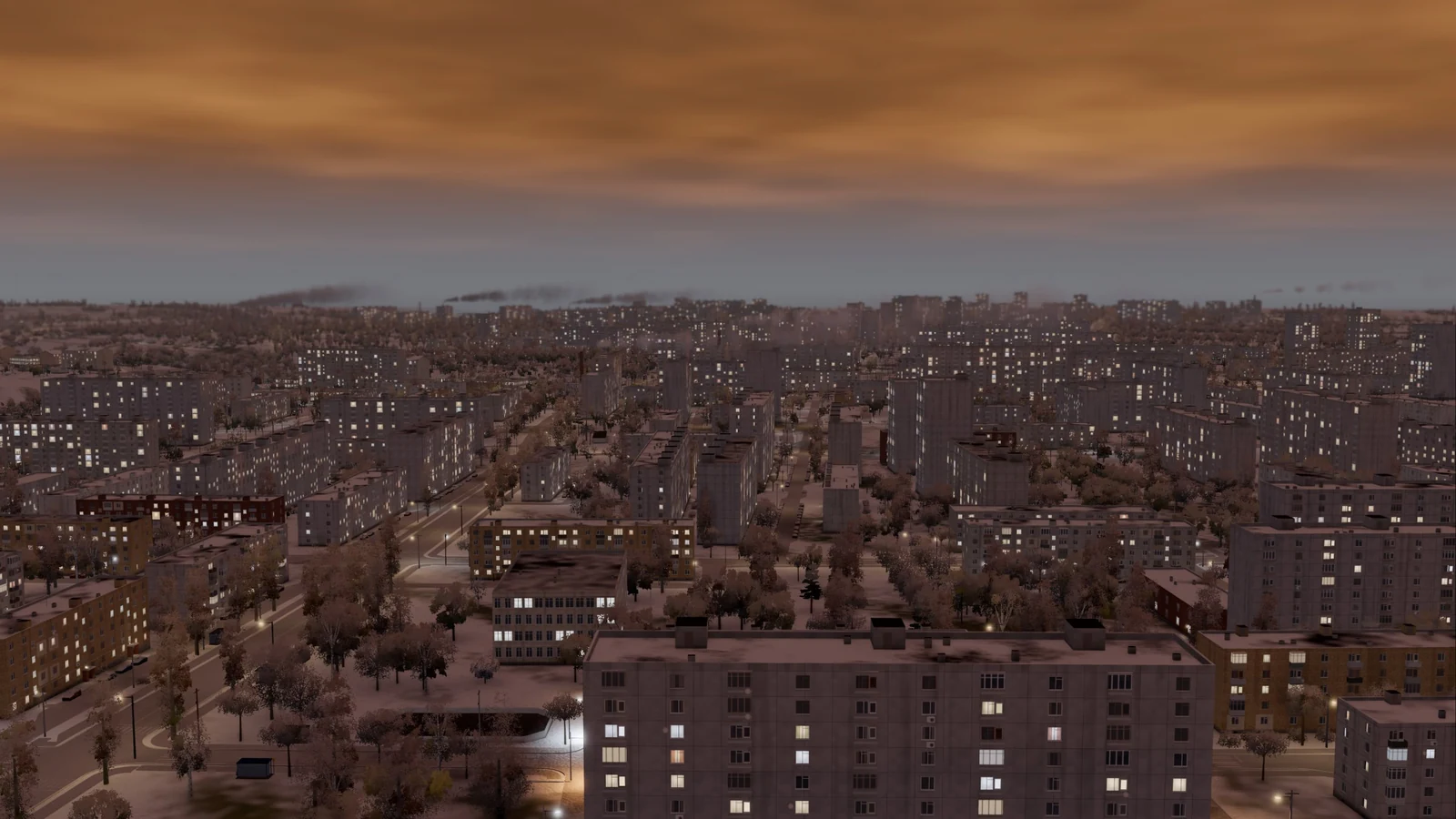
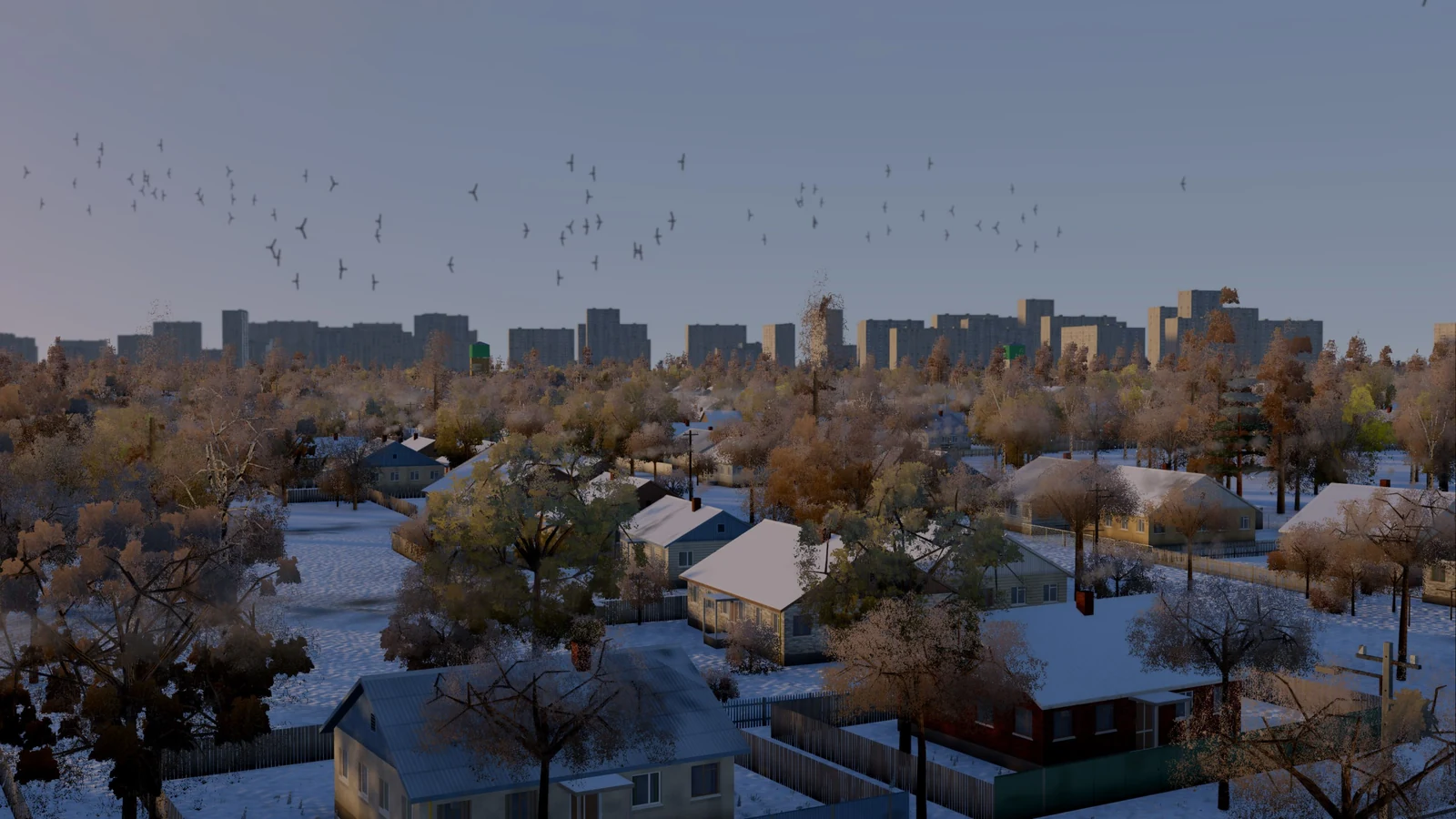
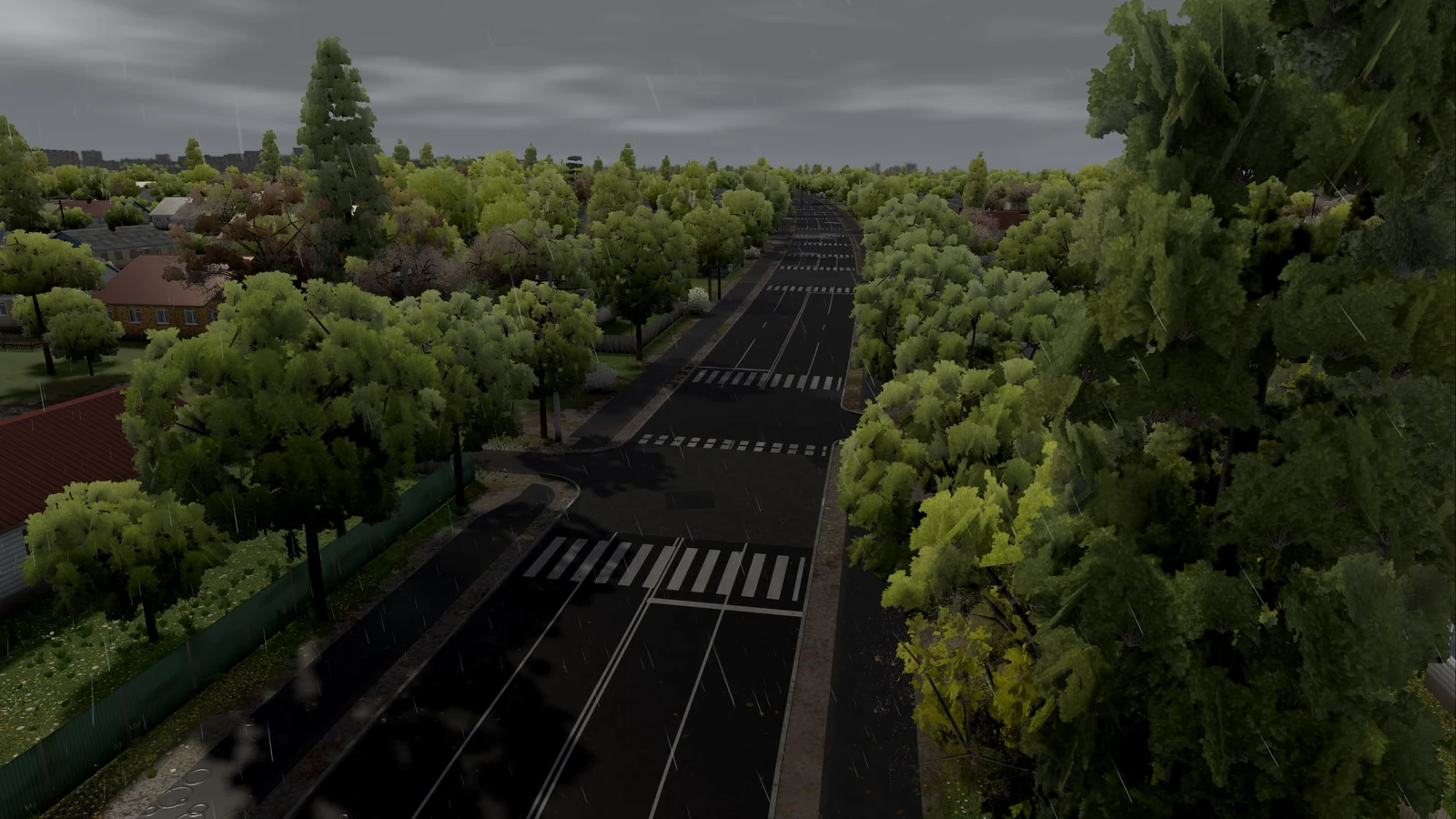
Every seed is a new city: spring, summer, autumn, winter
Every seed is a new city: spring, summer, autumn, winter1 / 10

News

■ #7

Radionet - OK Connection
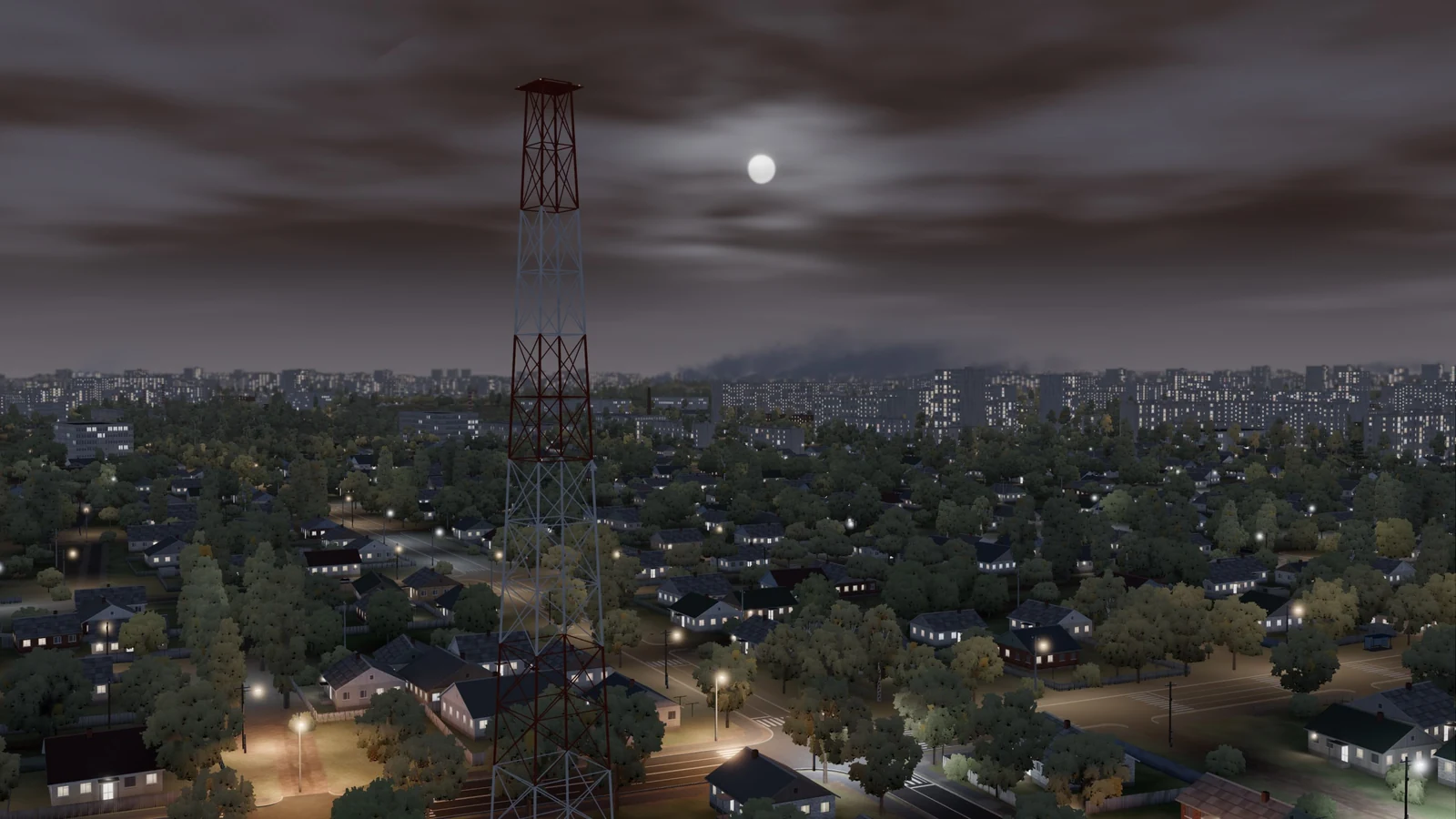
Night: a lattice tower above the private houses

In the company's early years, when fibre networks were not yet widespread, radio bridges become one of the few sensible ways to bring the internet to remote areas.

A radio bridge is a wireless connection between two points that can carry data over fairly long distances. Small providers used such solutions widely to connect remote buildings, villages and whole segments of their networks. One antenna transmits, the other receives, and from there the internet spreads through the local stretch of the network to the subscribers. Sounds simple, but in practice there are a few nuances...
Path profile for three spots: the link won't come up, comes up with a good margin, comes up on the edge

In Good Gateway, radio is simulated based on real physics. Distance, mounting height, antenna direction, terrain, transmitter power, antenna gain, frequency and signal attenuation are all taken into account. The game also calculates the link budget, the radio noise level, interference from neighbouring equipment and the available modulation, which determines the connection speed. Sounds scary, but on standard difficulty the virtual "administrator" will set most of this up automatically to "satisfactory" values - still, we think it's interesting to know.
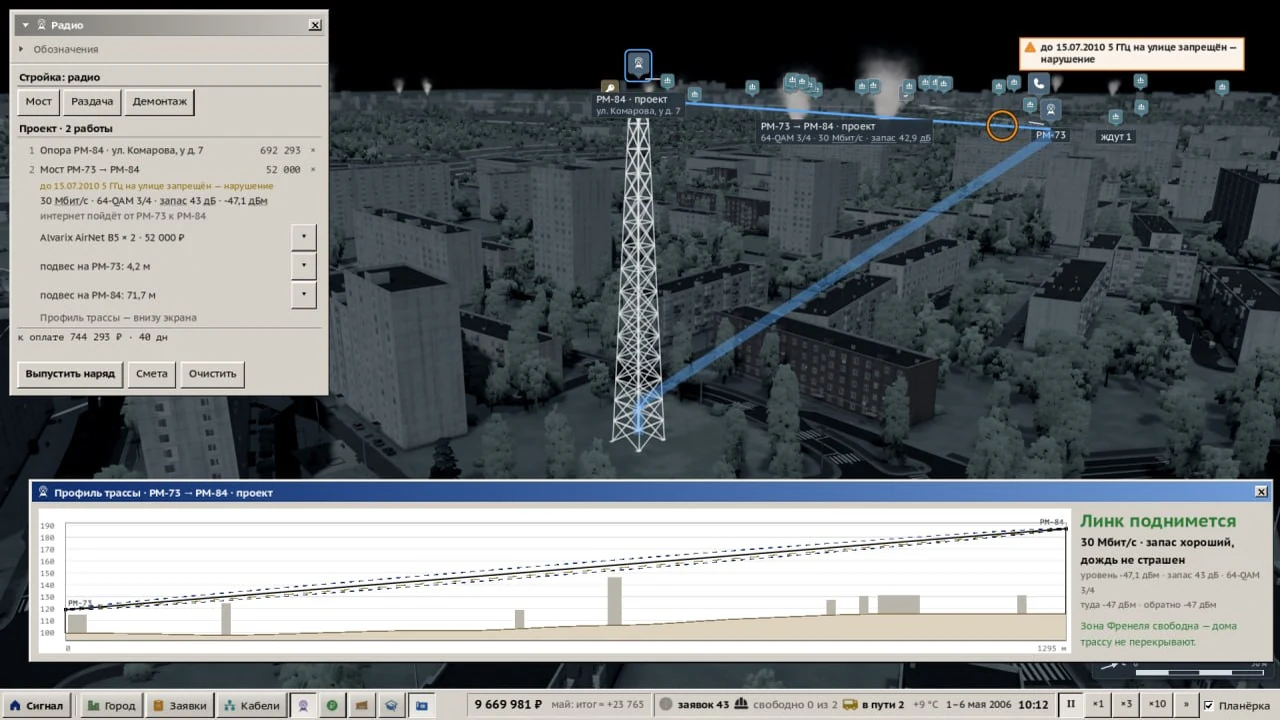
A radio bridge project to a tower: outdoor 5 GHz before 2010 is a violation

For example, one of the most important factors that decide whether a radio bridge works is the Fresnel zone. Radio waves don't travel strictly along the straight line between the antennas but occupy some space around it. And if a high-rise or a hill sticks out right in the middle of it, the signal can weaken noticeably even when the antennas still "see" each other. That's why building a bridge means looking for the right spot: in some places there will be no connection at all, in others it will work with losses, and somewhere you'll get an excellent signal. Sometimes moving an old antenna a couple of floors higher is more effective than replacing the equipment with something modern.

At the moment the game has radio links on 2.4 and 5 GHz. The latter band was historically not that simple for providers: in the former USSR countries the use of these frequencies was regulated quite strictly, and outdoor operator networks often required separate permits and approvals.
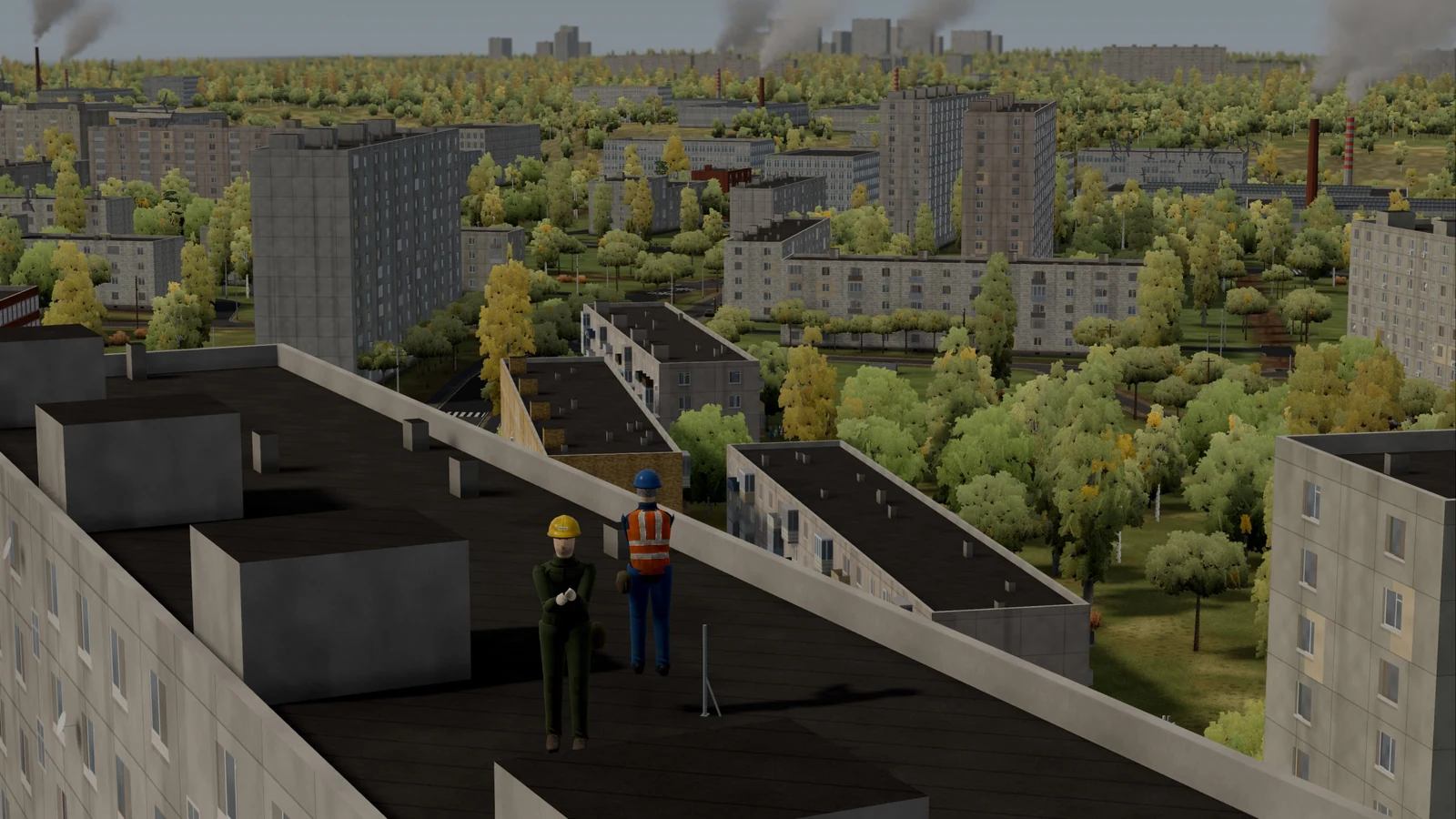
Installers on a high-rise roof

With the spread of fibre, radio bridges lost much of their popularity, but they haven't gone out of use: today a wireless link can be a sensible way to connect a remote site when laying cable to it is too expensive or simply impossible, and high bandwidth isn't needed.
■ #6

Vroom-vroom?

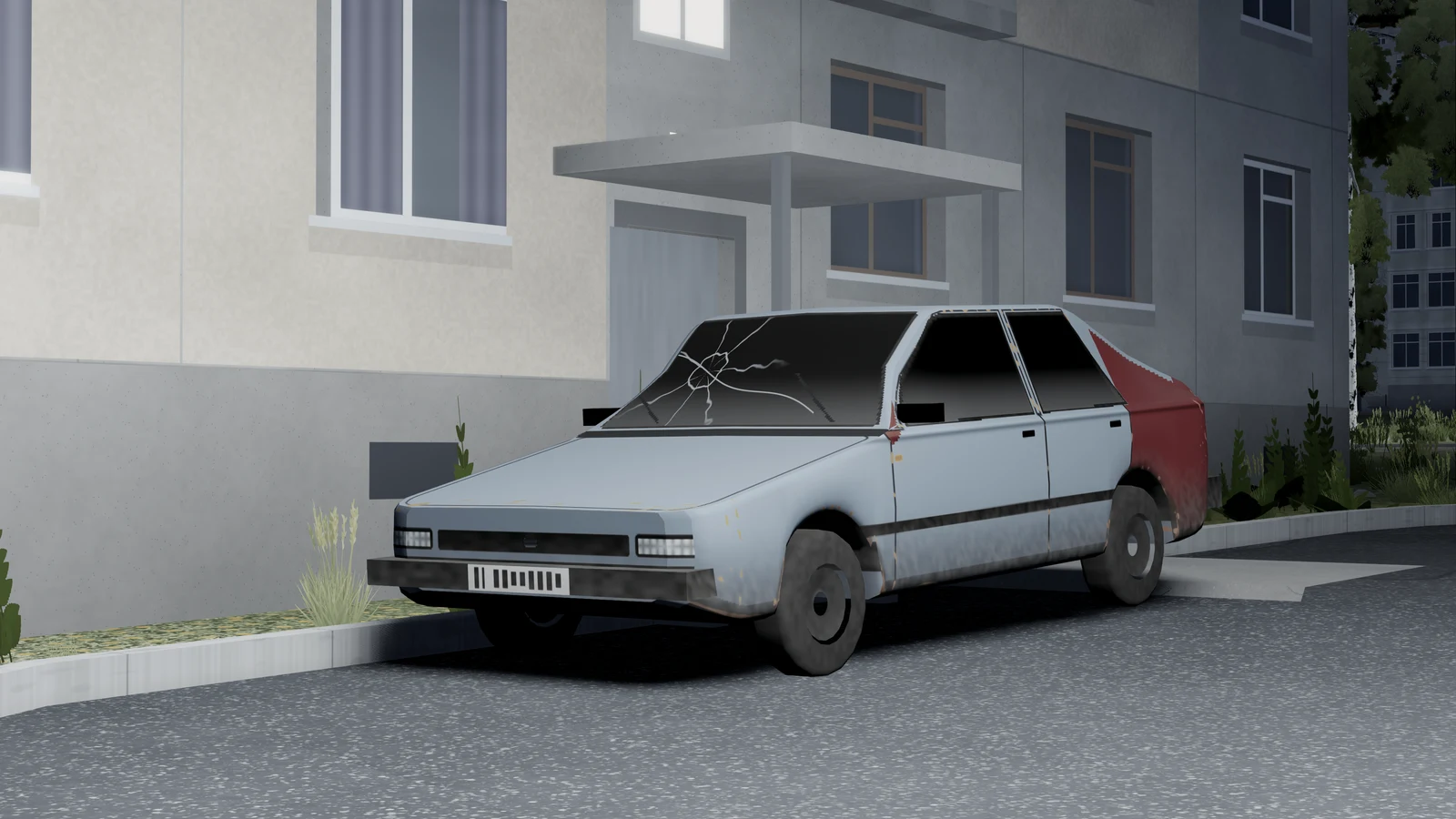
A hatchback with a cracked windscreen and a fender in a different colour

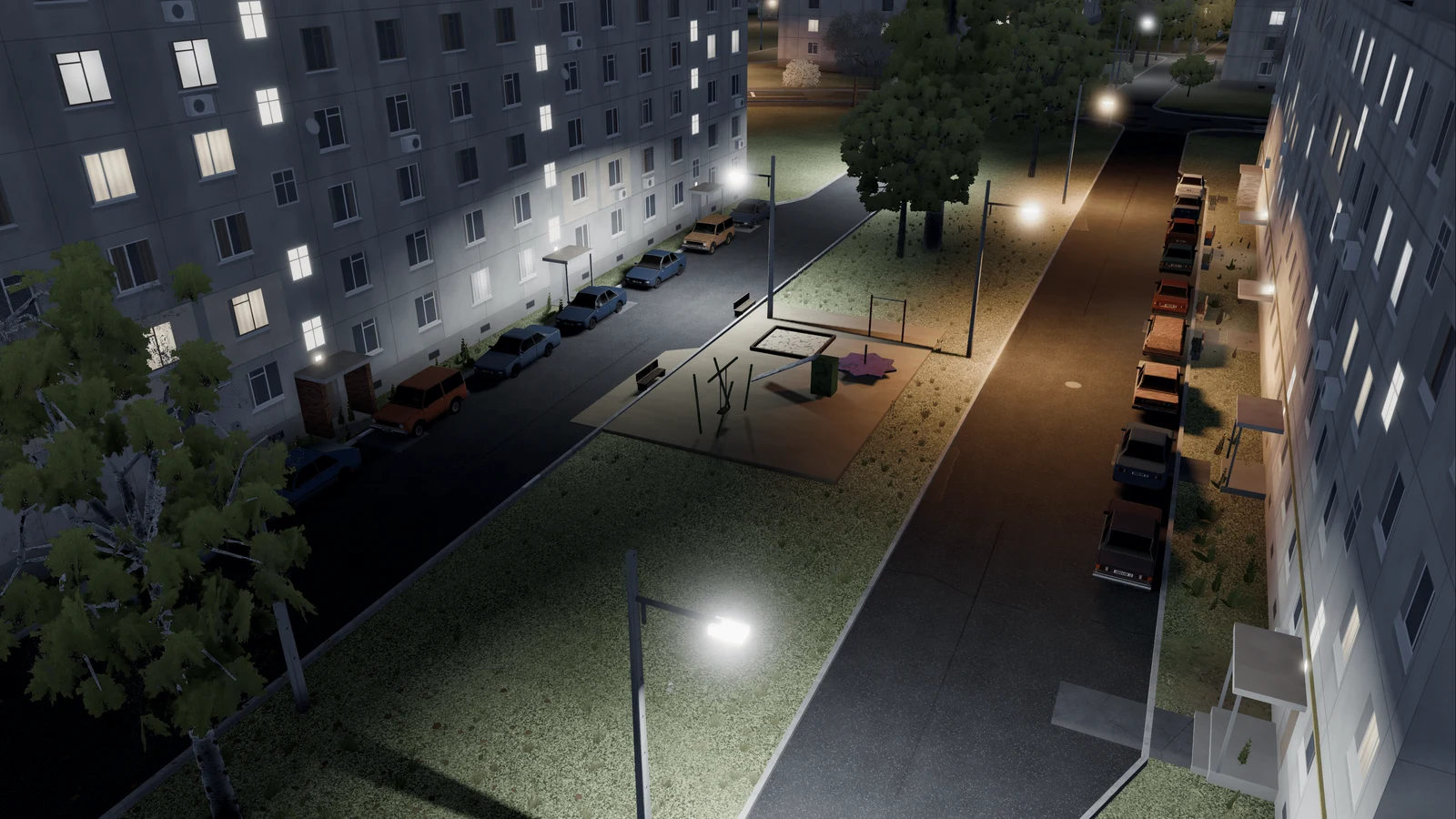
Between working on the core mechanics, we keep filling the city with small details. Cars, for example! Good Gateway currently has 37 vehicles from different eras - from angular classics to modern electric cars, including SUVs, vans and minibuses. And not a single one was modelled in advance: all the geometry, textures and condition effects are generated by the game engine on the fly, from code!

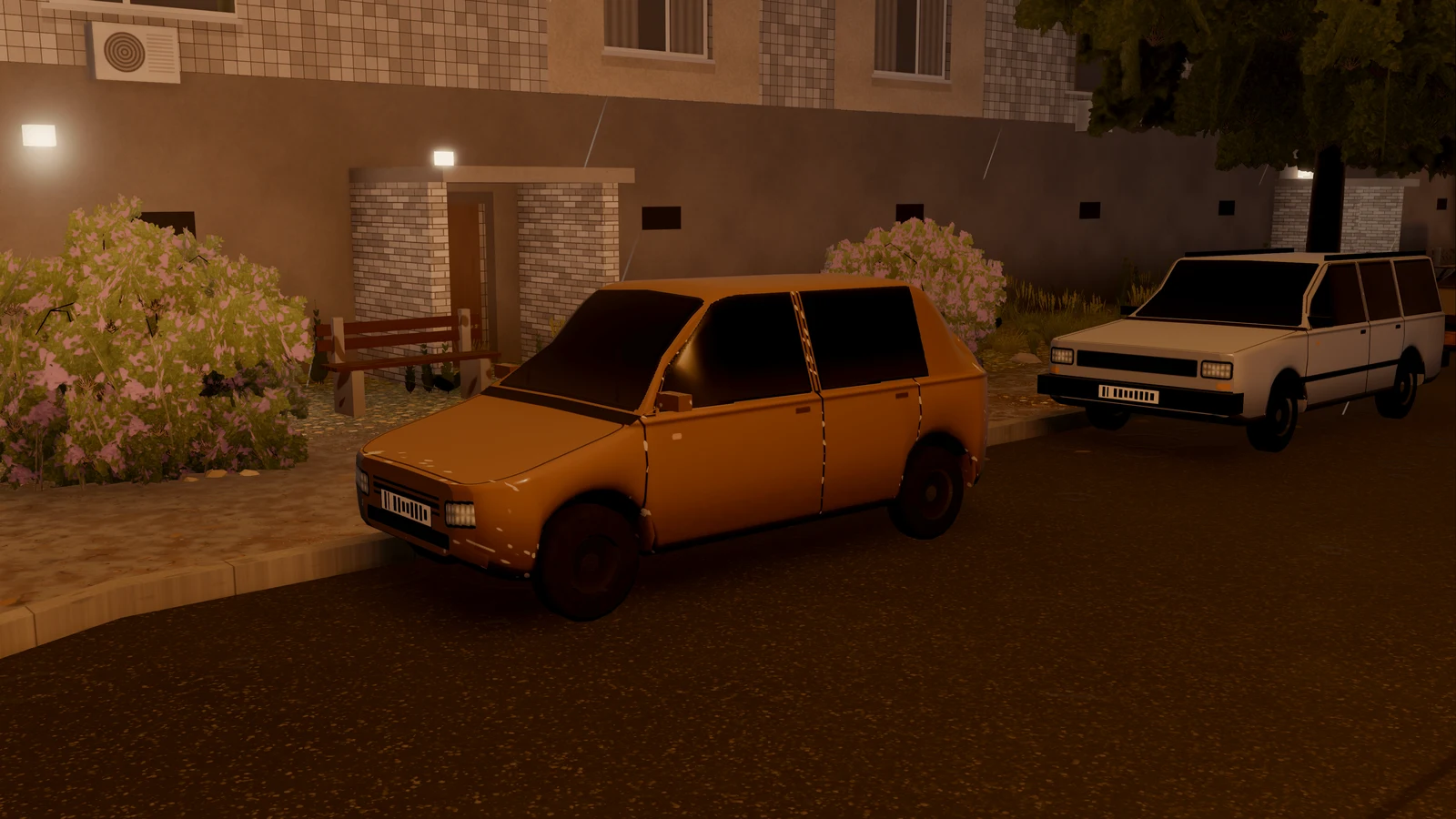
Cars by an entrance in the evening

Every car has its own mileage, condition of individual parts and degree of wear. Cars owned by the player's company - the repair crews' work vehicles - track the condition of individual parts, from the engine and gearbox to the suspension, brakes and battery. These crew vans wear out with use and can break down, and the simulation already accounts for the effect of weather on wear, repair costs and the restoration of faulty components.

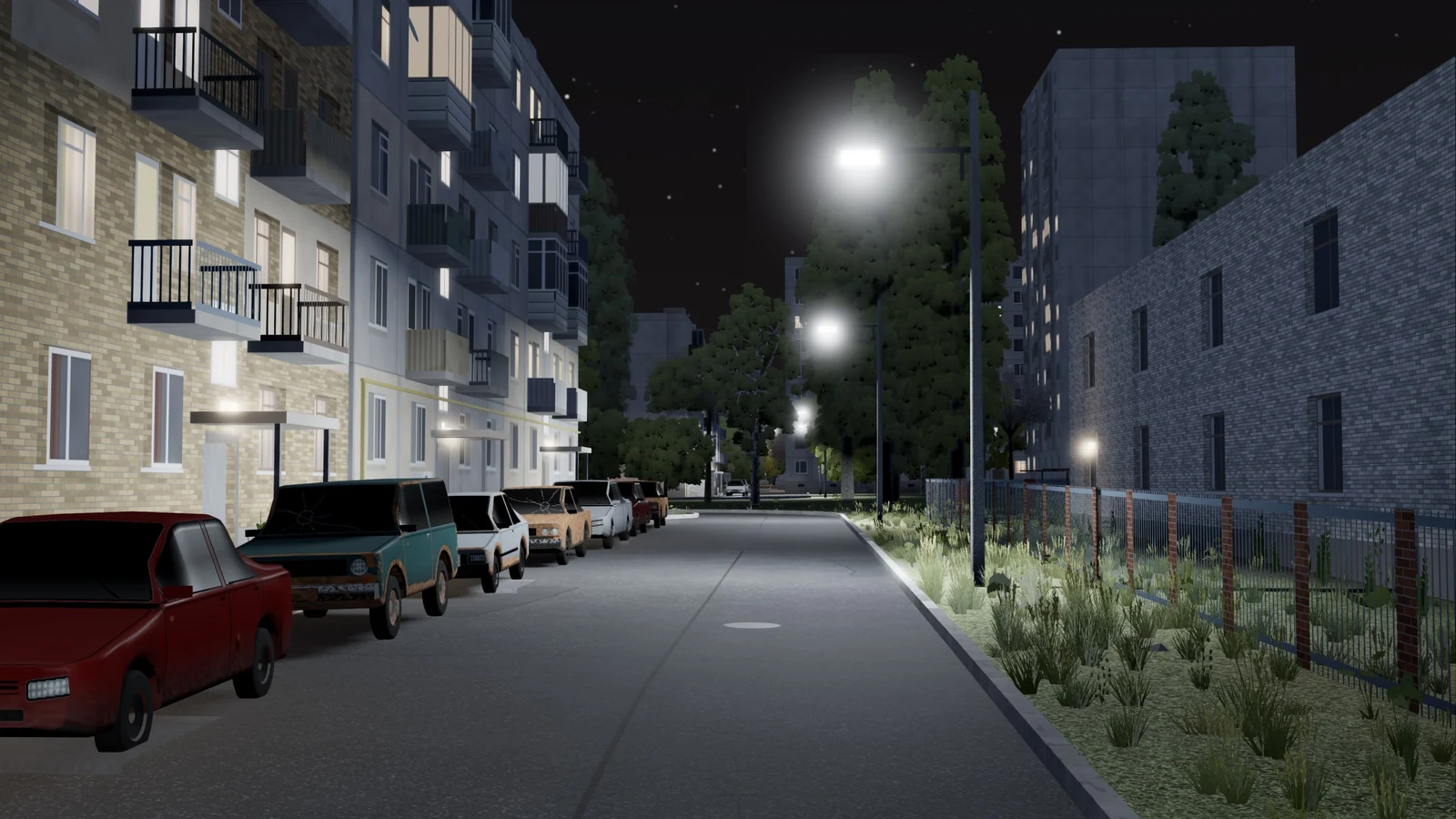
A courtyard at night: cars along the buildings

For now the cars in the city are only parked, but we plan to bring the streets to life with decorative traffic and to add buses, trucks and various special vehicles.

■ #5

Dynamic weather and seasons

An evening over the city

In Good Gateway the weather doesn't just set the "atmosphere" - it directly affects the gameplay.

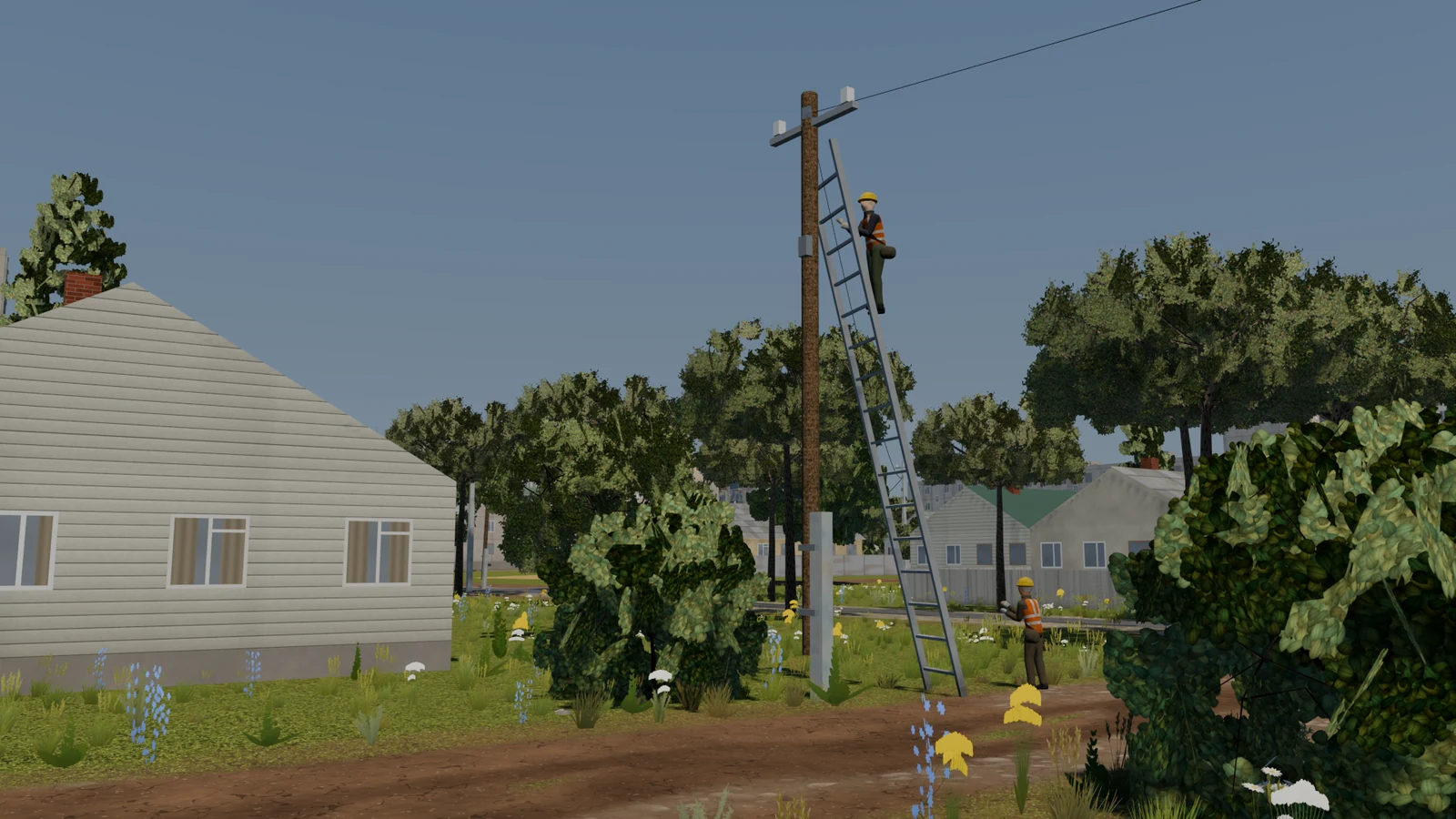
For example: in strong wind, thunderstorms, fog or ice, work at height is called off - you can't argue with safety rules (or with the technicians' wish to stay alive)! So the technicians go for a smoke break.

Splicing fibre in the open air depends on the conditions too: rain, snow and high humidity get in the way of the fusion splicer. The technicians go for a smoke break again.

In hard frost shifts get noticeably shorter - technicians may need to go back for warm clothes, warm up in the van every now and then, and not forget to step out for a smoke break!

The private sector after a snowfall

Equipment has its fun too: during a thunderstorm device ports can go out for a smoke... sorry, go out of order, and whole switches can burn out if protection wasn't installed in time. Subscribers can lose their ADSL modems/routers even without a storm - to a surge in the power grid. Strong wind raises the risk of breaks on aerial lines and can also knock a radio bridge antenna off its aim, noticeably degrading the link. Rain and fog affect signal quality as well.

But even when the bad weather is over, the consequences don't go away. In frost the batteries at network sites run down faster. Rain at least washes the dirt off the vans (though that's no substitute for servicing!), but road salt during icy spells "eats" the bodywork of the company vehicles very actively, noticeably shortening their service life.

A lot also depends on the conditions the devices have to work in: a thermal cabinet protects the hardware from extreme temperatures, an ordinary cabinet - from dust and humidity, and having neither protects the neighbourhood kids from boredom (at the cost of the equipment's life).

Summer rain

Every working day in Good Gateway starts with a "morning briefing" and a weather forecast. It helps you figure out what to expect from the day: whether to plan work at height, whether you can splice fibre in peace, or whether it's better to keep some crews in reserve in advance. You can prepare for some of nature's "whims" ahead of time, but sometimes all you can do is put off non-urgent tasks so that someone is free to deal with the aftermath.

Still, a forecast is no guarantee: the forecasters can get it wrong at the worst possible moment for you! Planned work grinds to a halt, the reserve crews are in high demand, and the easy-going work routine suddenly turns into a fight for survival.

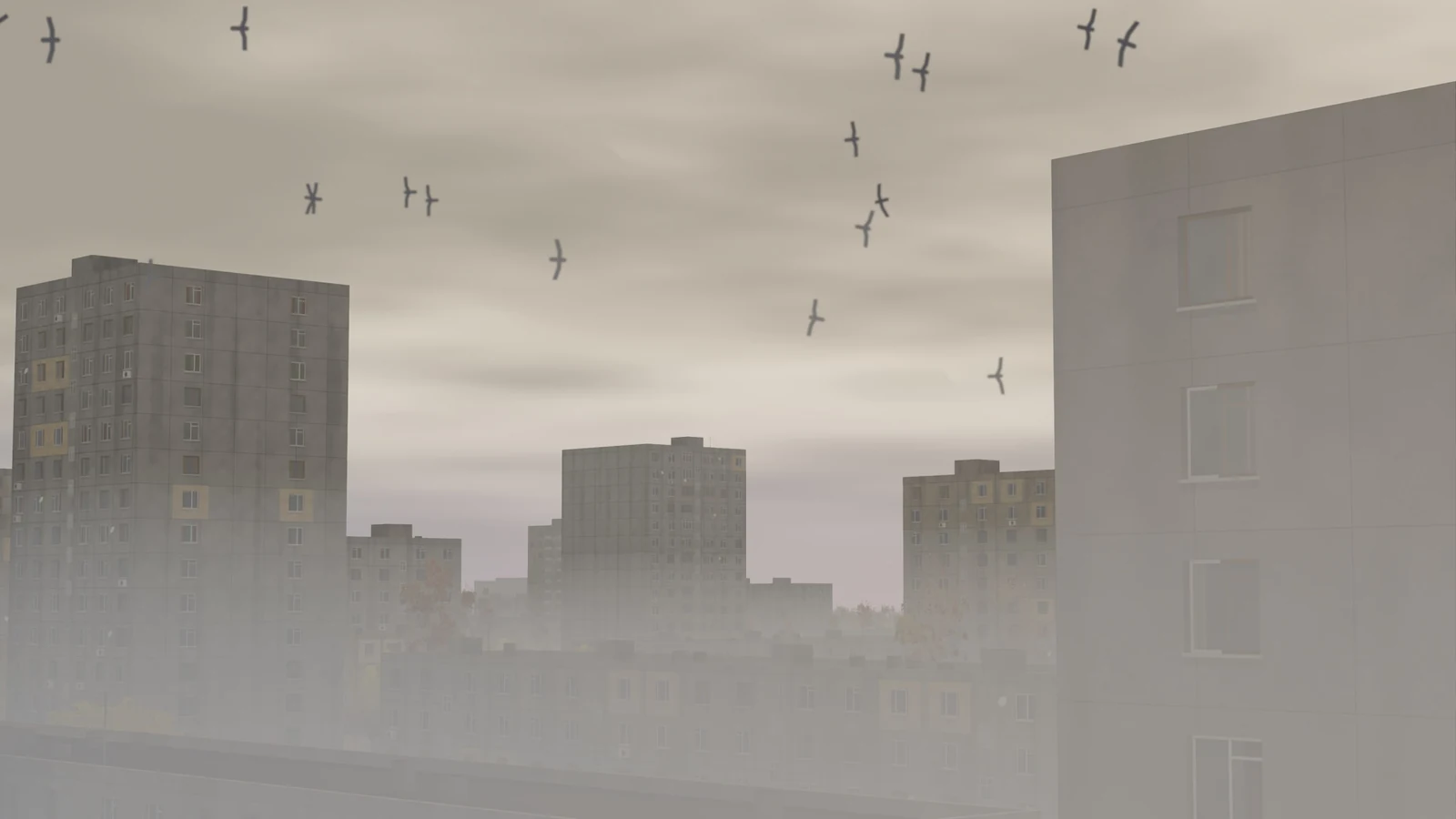
Fog over the apartment blocks

The weather also depends on the season: Good Gateway has a full in-game calendar that splits the game year into winter, spring, summer and autumn. The season determines the average temperature, the length of daylight and the odds of different types of weather (including extreme ones special to each season). Annual holidays are planned too, each with its own special effect, but for now those are only plans... On the other hand, a full lunar cycle is already in, affecting the chance of employees turning into werewolves!

Just kidding. The lunar cycle is purely decorative.

■ #4

Technology doesn't stand still

A city street at night

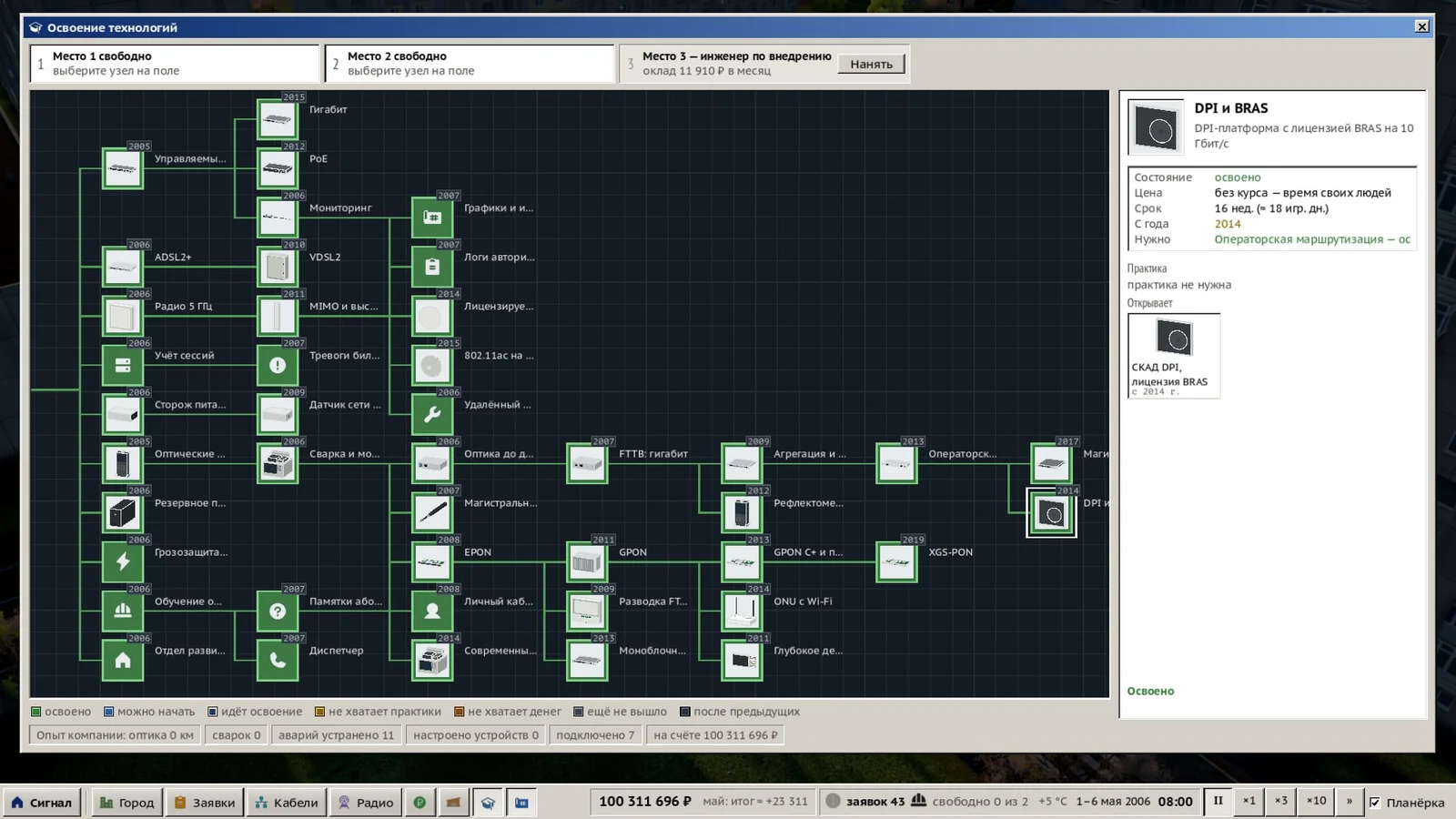
The technology tree in Good Gateway gives access to new equipment, unlocks new tools for technicians and even opens up new possibilities for the company as a whole. But behind every new research project there is time, money and the employees assigned to the job.

Technologies open up one after another, with an eye on the real history of how internet networks developed. You can't introduce monitoring of managed equipment without having mastered a single type of managed equipment. Some technologies simply don't exist in the world before a certain year. And even if all the conditions are met, your "specialists" may just lack the experience to cope with advanced equipment.

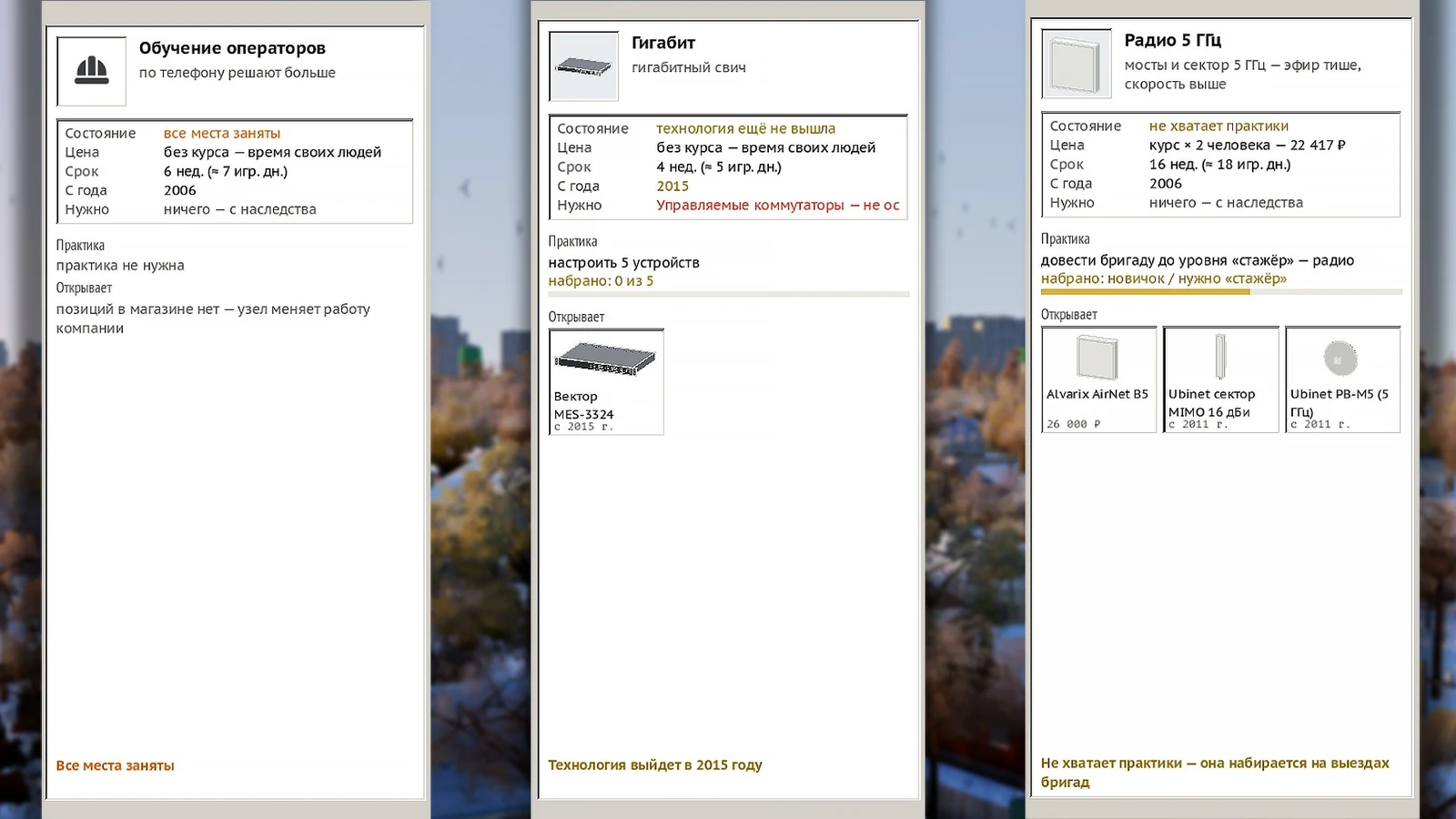
Technology cards: operator training, gigabit, 5 GHz radio

Not all research costs money directly. For example, operator training lets operators solve more problems right on the call with the subscriber, without filing a request for a technician visit. The price? A month of work of an experienced admin who will be babysitting the newcomers instead of doing their actual job. Free doesn't always mean cheap!

Up to three research projects can run at the same time. The second slot opens once you unlock and set up a Development Department within the company, and the third one after promoting a veteran employee to Implementation Engineer. The more slots you have, the easier it is to keep up with the times.

The "Technology development" window: the tree and the research slots

And keeping up with the times is not a luxury but a necessity. While you are getting ready to research gigabit fibre, one of your virtual competitors is already starting to lay it to their subscribers. What happens when they offer high-speed plans to IT companies and you don't?

Losses aren't always red lines with a minus sign in the quarterly report — they are also missed chances to earn. So that you don't have to learn this the hard way, keep an eye on the technology tree, director!

■ #3

Different buildings, different subscribers

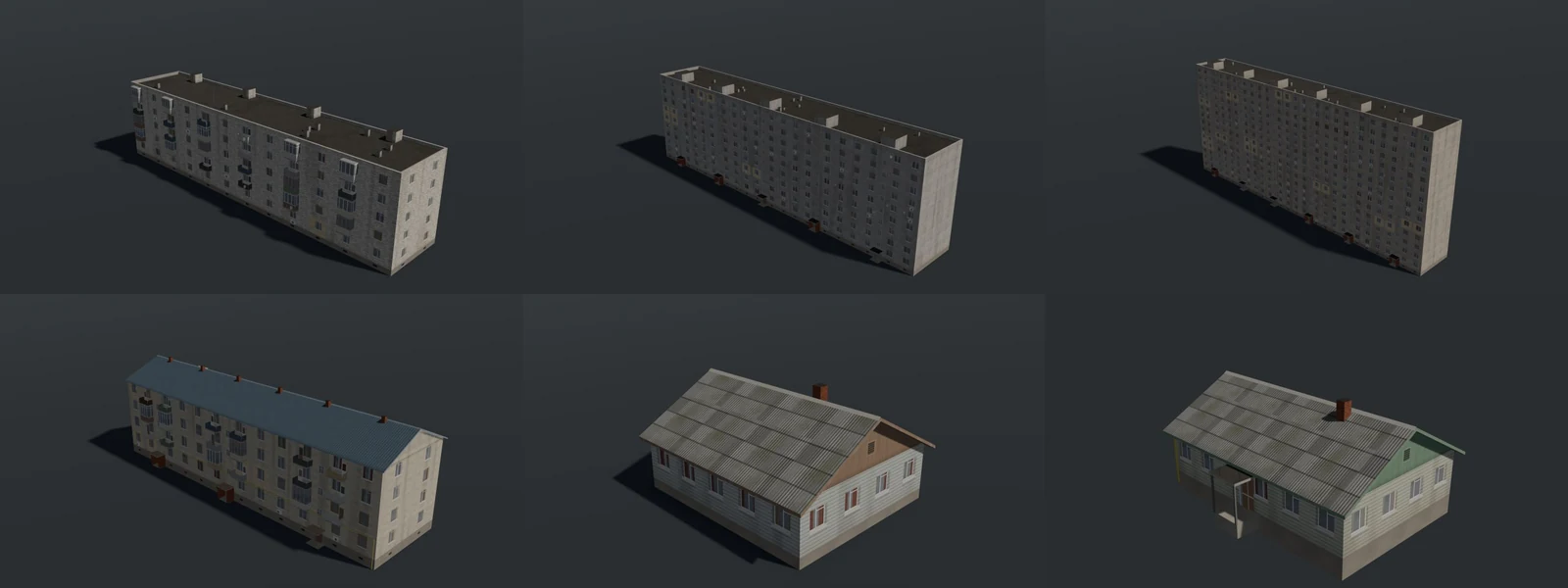
Some of the residential building series featured in the game

In Good Gateway, buildings are generated procedurally based on real building series that differ in the number of floors, wall material and number of flats, which affects the time and cost of any work in them. And no two buildings of the same series will ever look exactly alike!

The generator works out the details of every building when the map is created: insulated walls, glazed balconies, satellite dishes, air conditioners and other distinctive features are given to each building in a unique configuration determined by the world seed + object ID. The same principle gives a look of their own to the many decorative objects all over the map (more on that another time). As a result, the city is made of standard buildings, yet the facade, the mix of residents and the yard of every building are unique.

Such different "identical" buildings

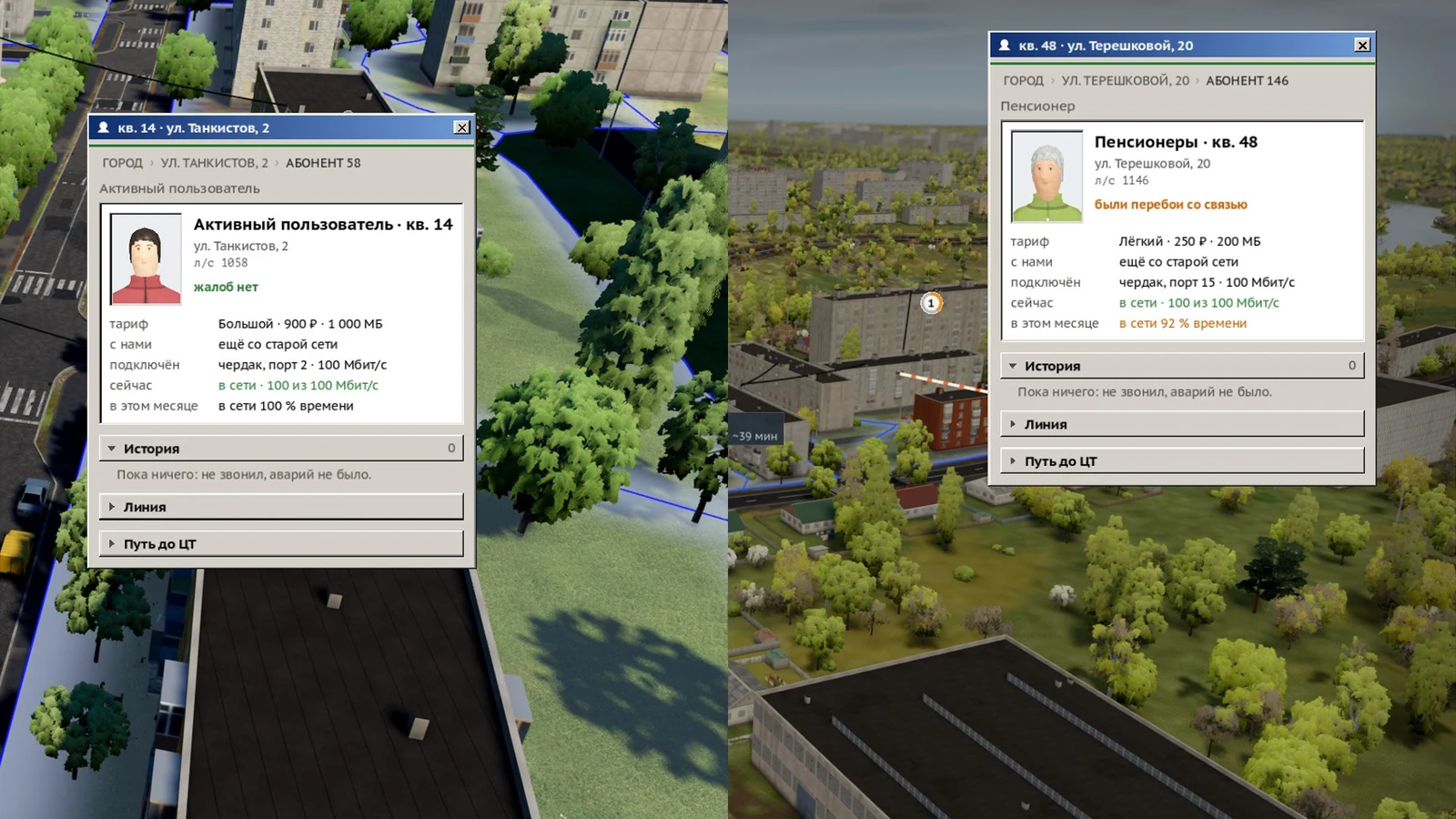
To simulate subscribers we use an agent system: every household (a flat or a private house) is represented by a separate agent with its own needs. Students, pensioners, families with children, gamers, IT specialists and other types of agents want different plans, order different extra services and use different amounts of traffic.

Subscriber cards: an active user and pensioners

A real internet provider works not with abstract metrics but with real people — in Good Gateway we try to show this through gameplay.

■ #2

How does the gameplay work in Good Gateway?

In Good Gateway you run an internet service provider and, step by step, turn a small business into a large company — we have that part figured out, right? But you won't be starting from scratch: you inherit a tiny provider, deep in the red and wrapped in an aura of bad reputation — so first you'll have to deal with the problems of your "bargain purchase".

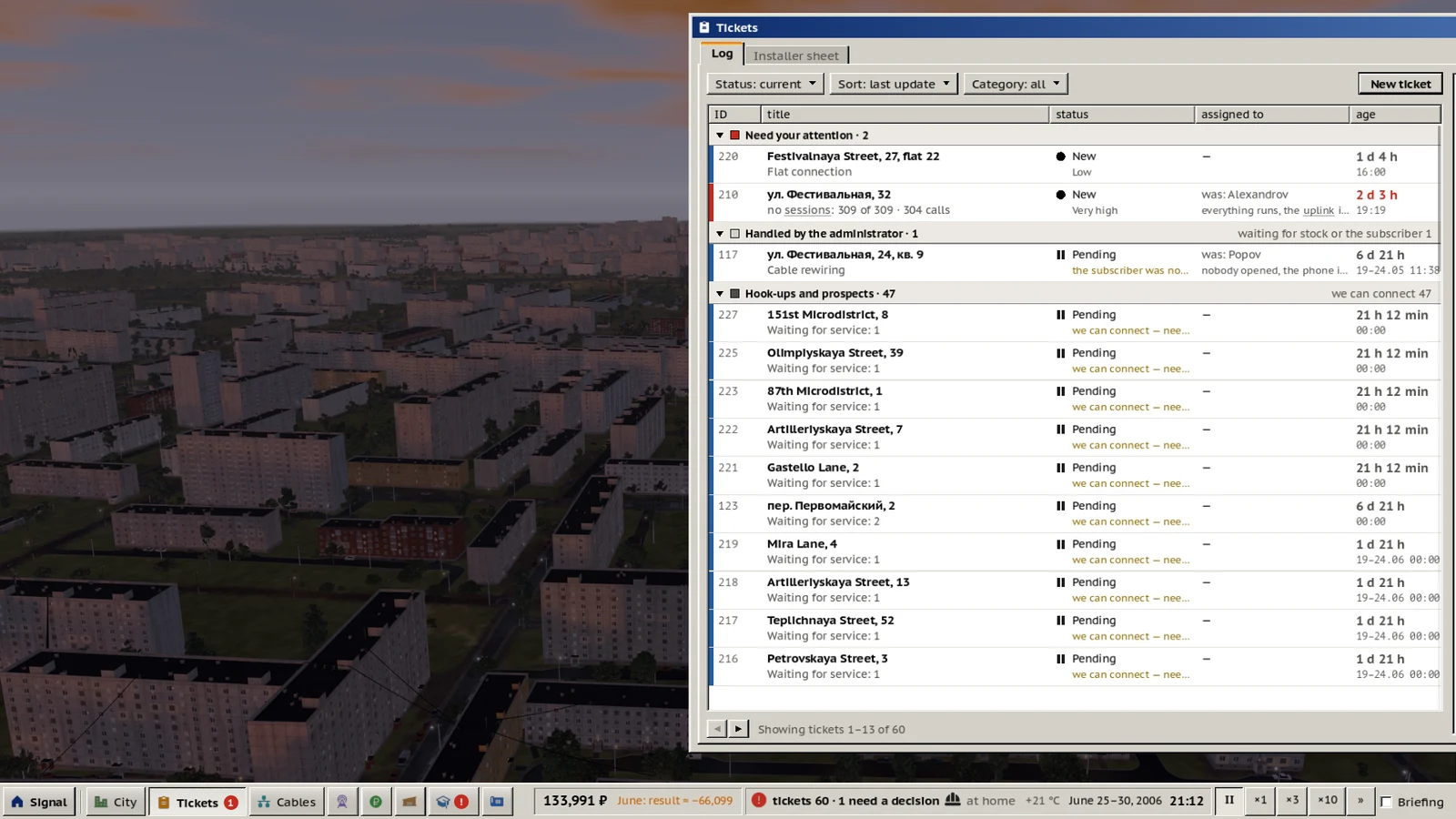
Evening in the city, requests piling up

The network you get is far from ideal — outdated equipment sits next to modern gear, bottlenecks slow connections down, your few employees can barely tell a modem from a router, and tech support is flooded with calls from unhappy subscribers — some of them filed a request a month ago and are still waiting for a technician to be assigned! And we haven't even mentioned the mess in the accounts, or the mysterious disappearance of a kilometre of copper cable from the warehouse...

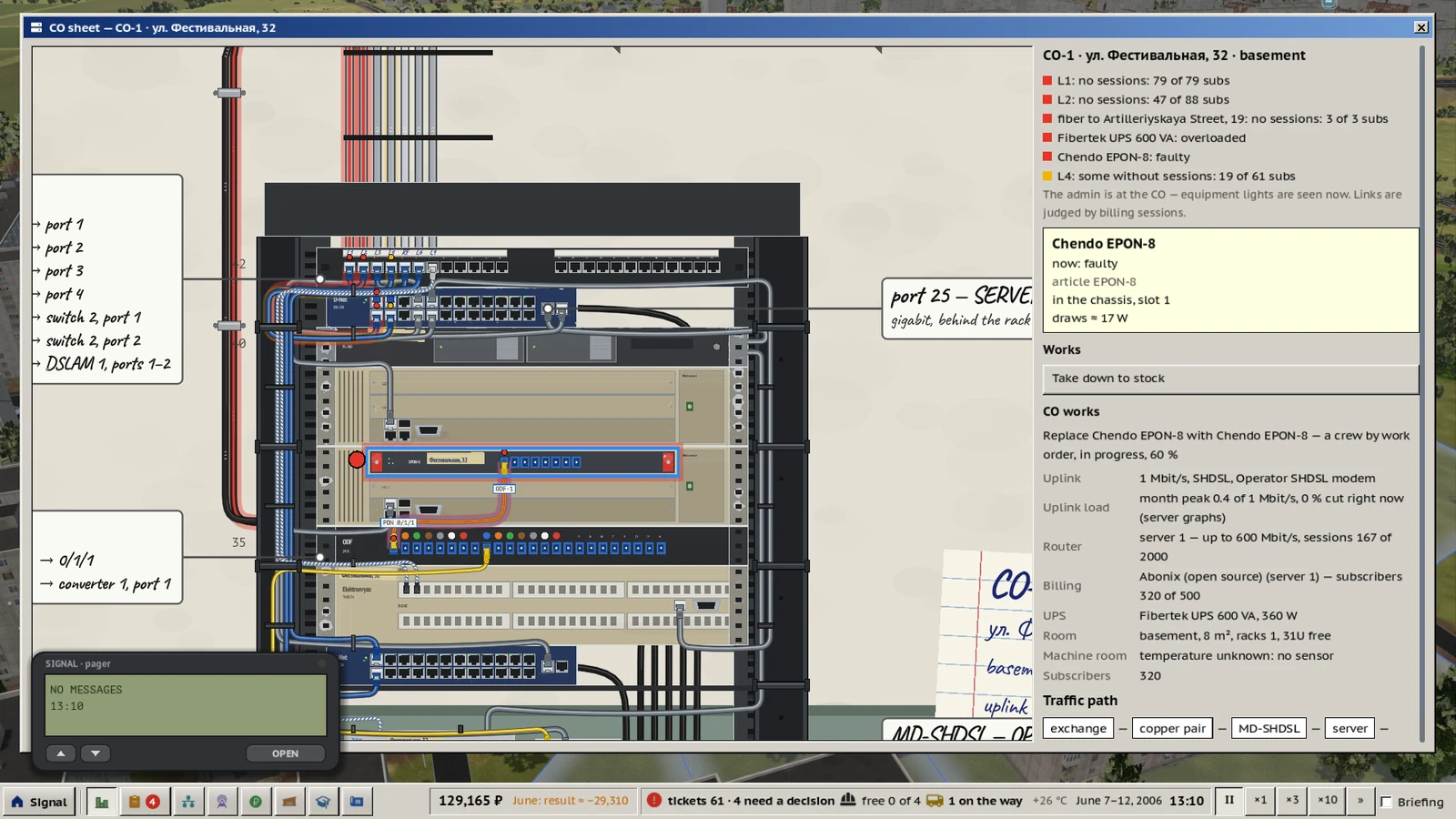
Exchange sheet: replacing a burnt-out card

First of all, you need to bring things to order — urgently find and fix the weak spots of the network, cut costs and decide which employees are worth training and which ones it would be wiser to part ways with. At the same time, you have to work through requests, rebuild relationships with customers and keep new problems from piling up on top of the old ones.

Installers pulling fibre along the poles

Once the business is finally back on its feet, it's time to think about growth — connect new buildings to the network, lay cables, expand your fibre-optic network, attract subscribers with marketing and look for ways to push your competitors aside. Sometimes it pays to make a deal with them instead of fighting on: for example, buy out a ready-made section of their network together with its subscribers.

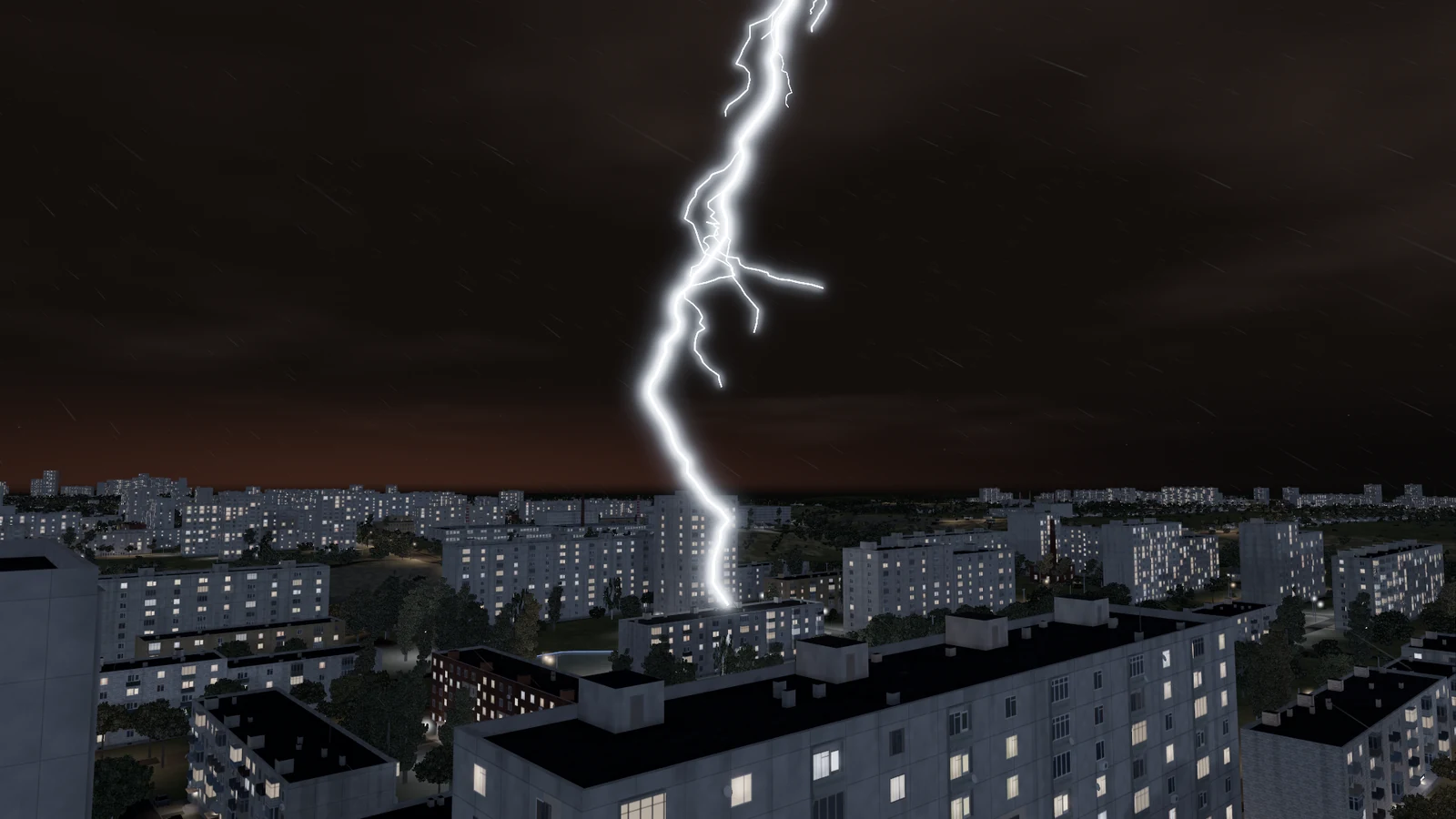
A thunderstorm over the city, lightning strikes a mast

But even a successful business is not safe from big trouble — a large competitor may try to push you out of the market, an economic crisis may hit your finances, and the local authorities may suddenly create new difficulties. Your task is to survive these trials, save up enough money and open a branch in a neighbouring region, where you can build a network and a reputation from scratch while keeping your technological progress and capital.

Good luck, director!

■ #1

The first GOOD GATEWAY trailer is ready for you to watch!

A bit of setup, a bit of gameplay and a first look at what is already in our game.

This is just the beginning. Subscribe so you don't miss new posts (and make us happy too)


In high quality here